
Key Takeaways:
- A HELOC for home improvement is a flexible line of credit secured by your home, often with lower rates than credit cards, and you only pay interest on what you use.
- Pick a HELOC when project costs may change over time, and pick a home equity loan or cash-out refinance when you want one fixed lump sum and steady payments.
- Because your home is the collateral, you should stress test your budget, expect payment changes, and compare options with a California mortgage broker before you decide.
Using a HELOC for home improvement is one of the most flexible ways to pay for projects without running up high-interest credit card debt. In simple terms, this is a line of credit secured by the home that you can draw from as you complete each stage of your renovation or repair.
Instead of opening a new loan every time a contractor sends an invoice, you open one credit line, borrow what you need, repay, and borrow again if the project grows. Because you are using home equity for renovations, rates are usually lower than unsecured personal loans or store cards.
In this guide, we walk through how home improvement financing with equity works, what it really costs, pros and cons, and how to compare a HELOC with home equity loans and refinance options. As a California-focused broker, ID Mortgage Broker can help you decide whether a HELOC fits your project or if another path makes more sense for your budget and timeline.
Quick Links:
- Home Equity Line Of Credit For Home Improvements
- HELOC For Renovation Step By Step
- HELOC For Home Repairs And Projects
- HELOC For Home Renovations And Remodels
- HELOC Or Home Equity Loan For Home Improvement
- HELOC For Home Improvement Vs Refinance Options
- Is A HELOC A Good Idea For Home Improvement
- Should I Get A HELOC For Home Improvements
- HELOC For Home Improvement With ID Mortgage
- FAQs
What is a HELOC for home improvement?
- A HELOC for home improvement is a revolving line of credit secured by the home that allows you to fund renovations over time. Instead of receiving a single lump sum of cash, you get a credit limit based on your equity and can borrow money as needed to pay contractors or buy materials. Its key features include flexible access, cost efficiency, collateral, and variable rates.
Home Equity Line Of Credit For Home Improvements
A home equity line of credit for home improvements works like a credit card tied to your home, but with more precise limits and usually lower rates. Your lender approves a maximum line based on your equity, and you can pull funds as needed for materials, labor, and permits.
Equity is simply the difference between your home’s current value and what you still owe on your mortgage. If your California home is worth 900,000 dollars and your loan balance is 600,000 dollars, you have 300,000 dollars in equity on paper.
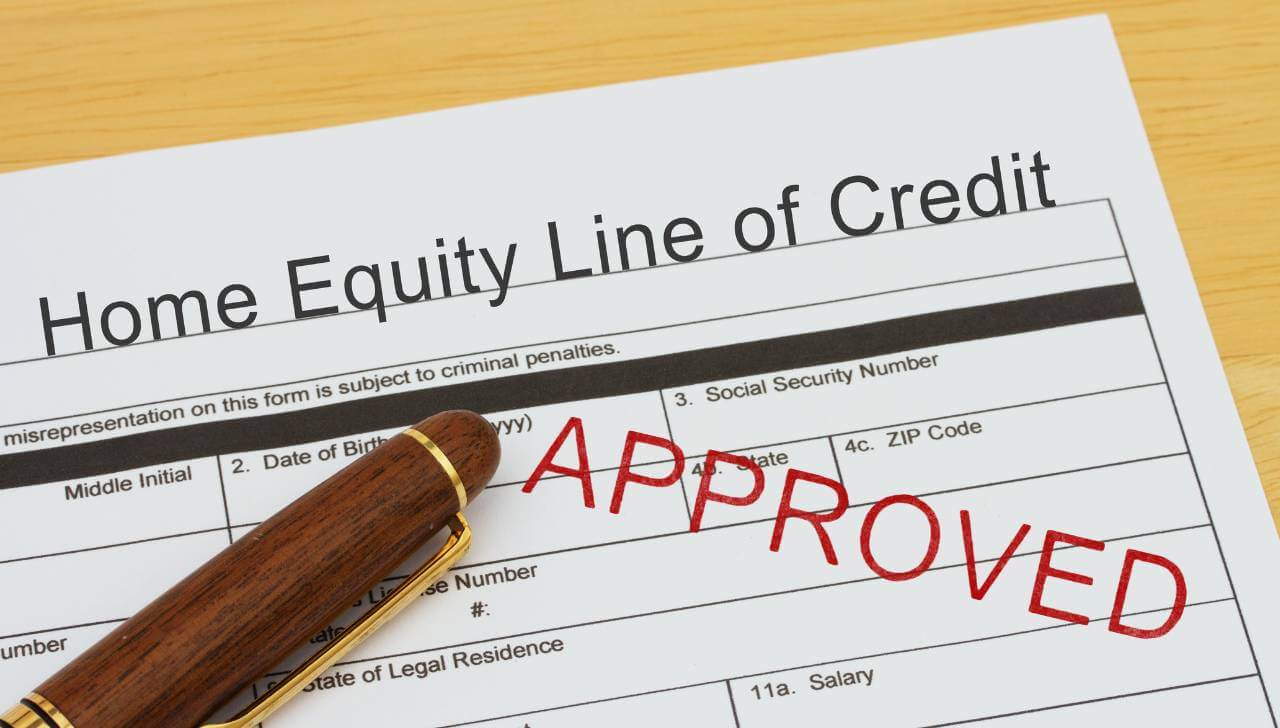
Many owners use a home equity line of credit for home improvements and other big goals, such as tuition or debt consolidation, not everyday swiping.
Because your home serves as collateral, the interest rate on a HELOC for home improvements is often lower than that of unsecured personal loans or retail financing, even though it still moves with the broader rate market.
A helpful way to think about it: the HELOC is just the tool. The real goal is a safer, more comfortable home that still fits your long-term budget.
Pro Tip:
- Before you apply, check your credit reports for errors and pay down small balances to improve your chances of a higher HELOC limit and a stronger rate.
HELOC For Renovation Step By Step
A HELOC for renovations can feel complex until you see it in real life. Here is the usual flow we walk through with California homeowners.
Step 1: Estimate your budget and equity
Start with a ballpark project budget from a contractor or your own research. Then look at your estimated home value and current loan balance to get a sense of how much equity you have available.
Step 2: Talk with a broker or lender
Next, we look at whether a home equity line of credit (HELOC) for home improvement fits your monthly comfort level and timing. We review your current mortgage rate, your goals, and whether a HELOC, a home equity loan, or a cash-out refinance is the better fit.
Step 3: Application basics
The application usually includes a credit check, income documents such as W-2s or tax returns, and a review of your home value and combined loan-to-value ratio. Some lenders use an automated valuation model; others order an appraisal.
Step 4: Draw period and repayment period
Most HELOCs have a draw period where you can tap the line and often make interest-only payments. After that, the loan enters a repayment period during which you pay both principal and interest.
Picture a kitchen remodel in Los Angeles. You might draw 20,000 dollars for demo and rough work, then another 15,000 dollars for cabinets and counters, and a final 5,000 dollars for finishes.
You only pay interest on what you actually draw at each stage, but because HELOC rates are usually variable, your payment can change over time.
A pattern we often see: the owners who plan for a payment bump after the draw period sleep better than those who assume the interest-only payment will last forever.
Pro Tip:
- Ask your lender to provide you with both the interest-only payment and the estimated full repayment amount in writing, so you can build your budget around the higher amount from the start.
HELOC For Home Repairs And Projects
A home equity line of credit (HELOC) can be a practical safety net when something breaks between paychecks. Think about the significant yet common issues we see in California homes: a roof leak after heavy rain, an HVAC system that fails in August, or electrical problems that require a licensed pro.
Because a HELOC is already open as a line of credit, you can pull funds for a 7,500 dollar roof patch or a 9,000 dollar air conditioner replacement without applying for a new loan each time. That is where a HELOC for emergency repairs can be convenient.
The key is discipline. Borrow only what you need, set a clear payoff plan, and keep some emergency cash for smaller surprises. A line of credit for home repair projects should support your budget, not replace all savings.
Timing matters too. If you cannot wait for HELOC approval, a hard money loan in California can sometimes fund urgent repairs faster, though costs and risks are higher. In cases where credit is challenged or the damage is severe, we carefully discuss those trade-offs before anyone signs.
Pro Tip:
- Try a pair of names for a couple of days before you commit. Say them out loud during feeding and playtime, and notice which ones feel natural and which names your cats seem to respond to.
HELOC For Home Renovations And Remodels
For larger projects, a home equity line of credit (HELOC) can give you room to adjust as plans evolve. Typical examples are a complete kitchen overhaul, a bathroom gut and update, adding a bedroom, or building an accessory dwelling unit in the backyard.

Because the line works in stages, it matches how remodels usually unfold. You can cover the demo and rough plumbing first, then draw again for cabinets, tile, and finishes, and then decide whether to upgrade or keep it simple. This flexibility is one reason many owners choose to renovate instead of moving when inventory stays tight, and mortgage rates feel high.
We often meet California families who say, “We love our neighborhood, we just need one more functional space.” In those cases, using a HELOC to improve the home they already live in can be cheaper than chasing a more expensive listing across town.
Pro Tip:
- Ask your contractor for a base plan and an upgraded plan so you can set your HELOC limit high enough to cover upgrades without feeling pushed to use every dollar.
HELOC For Remodel Decisions
A heloc for remodel projects tends to work well when:
- Your scope might change as you open walls.
- You want the option to pause or add phases.
- You prefer to borrow only what the contractor actually invoices.
A home equity loan for renovation can be a better match when you have a firm contractor quote, a clear timeline, and no plans to upgrade materials mid-project. It comes as a lump sum with a fixed rate and fixed monthly payment, which some owners prefer for budgeting.
For substantial additions or structural work, construction loans in California can sometimes beat a HELOC, especially when you need draws based on inspections and a clear build schedule.
Investors play by slightly different rules. If you are renovating a rental or flip, an investment property loan for renovations or a DSCR loan for rental property improvements may fit better than tying a HELOC to your primary residence.
HELOC Or Home Equity Loan For Home Improvement
Many clients ask a simple question: a HELOC or a home equity loan for home improvement, which is better? The answer depends on how predictable your costs are.
A HELOC for home improvement usually works this way:
- You receive a revolving line of credit.
- The interest rate is often variable.
- During the draw period, you may make interest-only payments.
- It shines when renovation costs are ongoing or uncertain.
A home equity loan for renovation works more like a traditional second mortgage:
- You get one lump sum at closing.
- The rate and monthly payment are fixed.
- It fits best when the project cost is well defined.
Here is a simple contrast. A homeowner in Orange County plans to refresh a kitchen and might upgrade appliances or finishes mid-stream. A HELOC lets them draw gradually and adjust as choices change. Another homeowner has a firm quote of 45,000 dollars to modernize a small bathroom. A fixed-rate home equity loan can give them a single check and a steady payment.
Pro Tip:
- When you compare a HELOC and a home equity loan, look at the total interest paid over the life of each option, not just the starting rate or first-year payment.
We help clients compare estimated total interest and monthly comfort over time, rather than focusing only on the starting rate. For a deeper dive into how equity options stack up against cash-out refis, see the guide on cash-out refinance vs home equity options.
HELOC For Home Improvement Vs Refinance Options
Comparing a heloc for home improvement with a refinance for home improvement options is essential before you tap equity. A refinance for home improvement, especially a cash-out refi, replaces your existing mortgage with a new, larger one and gives you the difference in cash for projects.
A HELOC may fit better when:
- Your current first mortgage has a low fixed rate you want to keep.
- You prefer to borrow in stages and pay interest only on what you draw.
A cash-out refinance might work when:
- You need a large lump sum up front for a major renovation.
- Your current mortgage rate is high, and you want one combined loan with a new rate.
In recent years, many homeowners across the country have used home equity loans and HELOCs to fund renovations instead of moving, especially in markets with limited inventory. We see that same pattern across California, where remodeling the home you know can feel simpler than trying to win a bidding war.

If you want to explore a full refinance path, you can review cash-out refinance for home improvements and the broader question of whether you should refinance your mortgage before locking in a new 30-year loan.
A quick gut check: if you would be sad to lose your current rate, a HELOC may deserve a closer look before you sign refinance papers.
Is A HELOC A Good Idea For Home Improvement
The question of whether a HELOC is a good idea for home improvement has a different answer for each household. It can be an innovative tool when:
- You have solid equity and a good payment history.
- Your income is stable enough to handle changes in payments.
- You want flexible borrowing for projects that may shift in size or cost.
- You do not want to disturb a strong first mortgage rate.
On the risk side, a HELOC is secured by your home. Missed payments can harm your credit and, in severe cases, lead to foreclosure. That is why we tell clients to stress-test their budgets before they borrow.
If your main goal is simply lower monthly payments, not renovations, a HELOC may not be the best first move. You might compare options to lower mortgage payments in California through a refinance or recast instead.
Used thoughtfully, a HELOC can turn idle equity into a safer, more comfortable home. Used carelessly, it can turn a dream project into long-term debt.
Should I Get A HELOC For Home Improvements
When clients ask, “Should I get a heloc for home improvements?” we often walk through a few simple rules of thumb.
- If your project costs are flexible and you want to draw funds over time, a home equity line of credit (HELOC) can match that pattern.
- If your costs are fixed and you prefer a set payment, a home equity loan or even a full refinance may be a better fit.
- If your income is difficult to document or your situation is unusual, you may need to use alternative programs outside standard HELOC guidelines.
Self-employed borrowers and business owners sometimes lean on no-document loan options or other creative structures when traditional paperwork does not tell the whole story of their income.
To see how a broker fits into the picture, you can explore the California mortgage broker guide and learn how we help compare HELOCs, home equity loans, and refinance offers on a level field.
HELOC For Home Improvement With ID Mortgage
A HELOC for home improvement works best when it aligns with your rate, timeline, and appetite for risk. In some cases, a HELOC is the clear winner. In others, a home equity loan, cash-out refi, investor loan, or DSCR structure can save more in the long run.
At ID Mortgage Broker, we look at your current mortgage, your estimated equity, and the renovation or repair you have in mind. We check whether a HELOC is even available on your property type, then model payment ranges across several options.
Our goal is simple. We help California homeowners and investors make wise choices about using home equity for renovation in California, so each project moves you closer to your bigger financial plan, not further away from it.
FAQs
What is a HELOC, and how is it different from a home equity loan?
A HELOC is a revolving line of credit secured by your home. You can borrow, repay, and borrow again during the draw period, usually at a variable rate. A home equity loan is a lump-sum second mortgage with a fixed rate and fixed payments from day one, which feels more like a traditional installment loan.
How long does it usually take to get a HELOC for a renovation?
Most HELOCs close in a few weeks, though timing depends on appraisals, title work, and how quickly documents are returned. In busy markets, we encourage clients to start the process at least a month before major work begins, so funding is ready when your contractor is.
Can I use a HELOC for a kitchen or bathroom remodel?
Yes. Kitchen and bath projects are among the most common uses of HELOCs, since costs can change as you choose finishes or adjust the layout. A HELOC lets you draw in phases as invoices arrive instead of guessing the exact total on day one.
What happens to my HELOC if I sell my home?
When you sell, both your first mortgage and HELOC are usually paid off from the sale proceeds at closing. Escrow will request payoff figures from your lenders, send the funds, and then any remaining equity after costs will be paid to you.
Can I get a HELOC on a rental or investment property?
Some lenders do offer HELOCs on rentals, but guidelines are tighter, and rates can be higher than on a primary home. Many investors use dedicated rental and DSCR products instead,