
Key Takeaways:
- The amount of equity protected ranges from $361,076 to $722,507 and depends on the median home price in your specific county.
- You receive the California homestead exemption automatically as long as you own the home and use it as your primary residence.
Buying a home in California can feel a little overwhelming because, between mortgage terms, property taxes, paperwork, and legal protections, it is easy for first-time home buyers to wonder, “Wait, what did I just sign up for?”
One helpful protection to understand is the California homestead exemption that helps protect a portion of your home equity if you run into serious financial trouble.
This guide breaks down how the homestead exemption in California works, what benefits it can offer, where its limits are, and how it may support long-term homeownership and wealth building.
Quick Navigation
- What is the Homestead Exemption?
- How can it Be Used
- Long-Term Wealth and Homeownership
- Maximizing the Homestead Exemption in California
- Who Qualifies for the California Homestead Exemption?
- Protect Your Home Equity
- FAQs
What is the Homestead Exemption?
The California homestead exemption is a legal provision designed to protect a portion of the home’s value from creditors. It is a crucial benefit for those who buy a house as a non-US resident and want financial security.
As of recent updates, the homestead exemption in California has been offering different levels of protection depending on the status of the homeowner:
- $361,076 to $722,507. This exemption amount varies by county and is adjusted annually for inflation based on the county’s median home price.
- Special Considerations. A fixed $175,000 exemption applies to specific groups, including people aged 65 and older, individuals with disabilities, and qualified veterans who may also benefit from VA home loans in California.
Pro Tip:
- Since the exemption amounts change based on inflation and local home prices, the amount of equity you can protect might increase every January. It is a good idea to check the new numbers for your county at the start of each year.
How can it Be Used?
Let’s say an unforeseen medical emergency has put a homeowner into personal bankruptcy. Under California’s Homestead Exemption, assuming the home is worth $800,000 and considering the applicable exemption of $500,000 based on the county median sale price, creditors would have only $300,000 in non-exempt home value to claim.
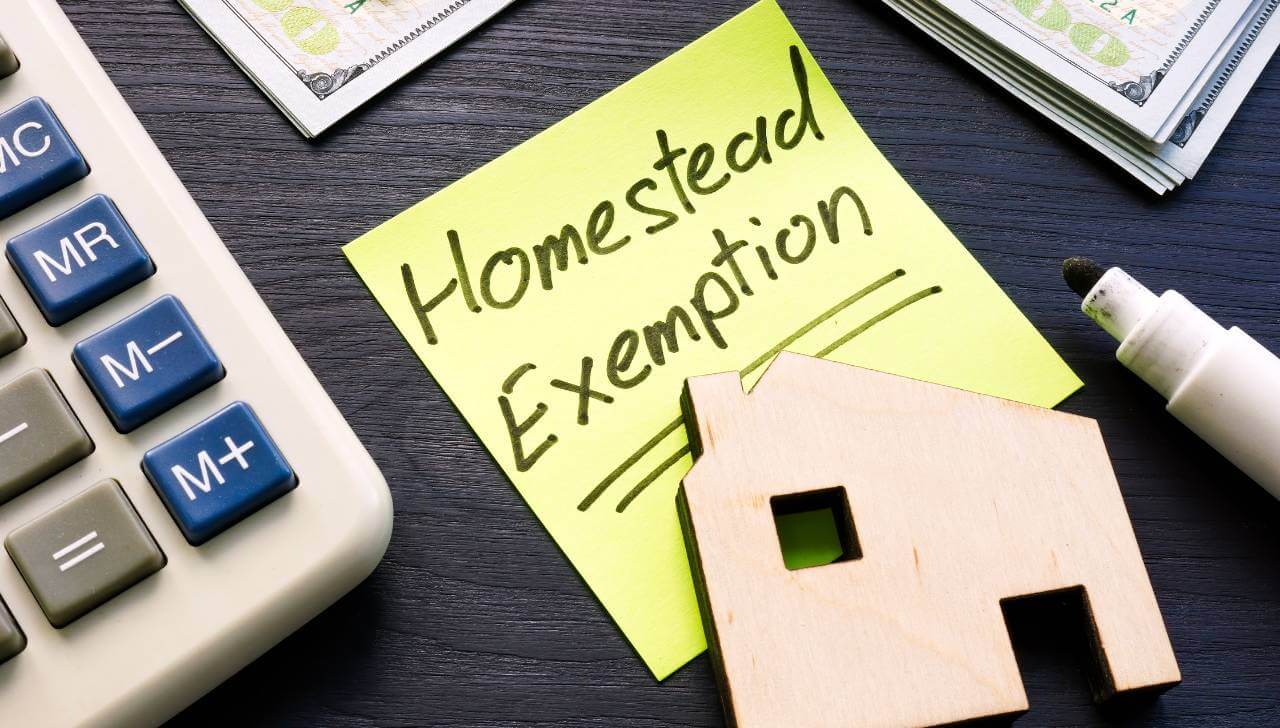
This protection ensures that a homeowner, in most cases, would not have to endure the complete loss of their residence when combined with strategies to lower mortgage payments in California.
Pro Tip:
- The automatic protection is great, but filing a formal “declared homestead” with your county recorder offers extra help. It can protect your sale proceeds for six months, giving you time to move that money into a new primary home.
Pros of the Homestead Exemption
The homestead exemption offers several valuable advantages that support financial security and homeownership stability.
- Asset protection. Asset protection is a significant benefit of applying for a homestead. Anyone facing financial stress is assured that the equity in the house is protected up to the exemption limit.
- Property tax reduction. The homestead exemption itself does not reduce property taxes. However, a separate ‘homeowners’ property tax exemption’ can reduce the taxable assessed value by $7,000, resulting in minor annual savings.
- Peace of mind. Knowing that one’s home has partial protection from creditors brings great emotional and financial peace of mind.
Pro Tip:
- The $7,000 property tax exemption is not always automatic like the equity protection is. Double check with your county assessor to ensure you filed the one-time form required to get this discount on your tax bill.
Cons of the Homestead Exemption
Despite its benefits, the homestead exemption also has limitations that homeowners should be aware of.
- Limited protection. The exemption protects only equity up to a certain amount. Large home equity could be exposed in high-value markets like many in California, where jumbo loans are more common.
- Complex legal. The application process and understanding of eligibility can be complex without legal advice.
- False sense of security. It is partial protection, so homeowners think that all their equity is protected when it’s only a portion of it.
Pro Tip:
- If your home is worth much more than the protected limit, the homestead exemption might not be enough. Talk to an insurance agent about an umbrella policy to provide a higher level of protection for your assets.
Long-Term Wealth and Homeownership
Homeownership with a homestead exemption is one of the strategic tools for building wealth in the long run. The partial protection of homeowner equity decreases the risk based on negative changes in economic forces and personal financial crises.

Over time, as property values rise and mortgage balances are paid down, the equity protected by the exemption becomes an increasingly large part of the homeowner’s wealth portfolio, especially for those considering investment property loans in California.
More importantly, this home equity may be tapped over time, such as through a cash-out refinance to finance investment, retirement, or serve as a financial cushion that can enhance the financial resiliency and stability of the homeowner.
Maximizing the Homestead Exemption in California
The CA homestead exemption may not sound exciting at first, but it can play a big role in protecting the home you worked hard to buy. Think of it as one layer of financial armor for your property. It does not make your home untouchable, but it can help protect part of your equity if life throws a costly curveball.
For California homeowners, this protection can support long-term financial security. Your home is often more than a place to sleep, cook, and argue over thermostat settings. It can also become one of your biggest financial assets. By understanding how the homestead exemption works, you can make smarter choices about home equity, debt, refinancing, and future planning.
Still, the rules can get tricky. Exemption amounts, creditor claims, liens, and bankruptcy situations are not always simple. Before relying on this protection, it is best to speak with a qualified California legal or financial professional who can review your situation and guide you properly.
Who Qualifies for the California Homestead Exemption?
To qualify for the CA Homestead Exemption, the property generally needs to be your main home, not a rental, vacation home, or investment-only property. The rule is centered on ownership and residence. In simple terms, you must have an ownership interest in the home and use it as your principal residence.
California’s homestead protection can apply to different types of dwellings, but the facts matter. A first-time buyer may qualify if the home is used as their primary residence. A non-US resident may also qualify if they own the California property and live in it as their main home. Citizenship is not the main issue. Residence and ownership are more important.

You may qualify if:
- You own or have an interest in the California home
- You live in the property as your primary residence
- You are claiming protection for only one homestead
- The property is not used only as a rental or investment property
- Your equity falls within the protected exemption limit
Homeowners with complex debt, liens, bankruptcy concerns, or shared ownership should speak with a California legal professional before relying on the exemption.
Pro Tip:
- If a creditor ever challenges your exemption, you will need to prove the home is your main residence. Keep copies of your utility bills, voter registration, and driver’s license updated with your current home address.
Protect Your Home Equity
The homestead exemption in California can be a helpful layer of protection for homeowners, but it works best when it is part of a bigger financial plan. It can help protect a portion of your home equity, but it does not erase debt, stop every type of claim, or replace smart mortgage planning.
For first-time home buyers, non-US residents, veterans, investors, and current homeowners, the real value comes from understanding how home equity, loan structure, refinancing, and long-term ownership all work together. The more you know before making a major move, the fewer surprises you may face later.
ID Mortgage Broker helps California buyers and homeowners compare mortgage options that fit their goals, budget, and financial situation. From buying your first home to exploring refinancing, jumbo loans, VA home loans, investment property loans, or non-US resident mortgage options, our team can help you make clearer decisions.
Ready to protect your homeownership plans and build with more confidence? Contact ID Mortgage Broker today and get guidance tailored to your next move.
FAQs
How much is the homestead exemption in California?
The California homestead exemption protects a set amount of home equity based on county home values. The amount is the greater of the countywide median sale price for a single-family home or the state minimum, up to the legal cap. These figures adjust each year for inflation.
Do you have to file for the California homestead exemption?
No. California gives homeowners an automatic homestead exemption if they own and live in the home as their main residence. A declared homestead is different because it is recorded with the county and may help protect sale proceeds for a limited time.
Does the California homestead exemption lower property taxes?
No. The California homestead exemption protects part of your home equity from certain creditors. The separate homeowners’ property tax exemption can reduce your home’s taxable assessed value by $7,000 if the property is your main residence.
What does the California homestead exemption not protect against?
The California homestead exemption does not protect your home from every claim. It generally does not stop mortgage foreclosure, mechanic’s liens, child support, spousal support, or debts tied directly to the property.